Hard2bit
Universities · ENS · NIS2 · GDPR research Public · Private · Research · EdTech · Centres of excellence

Cybersecurity for universities and higher education — with a real focus on infrastructure security, ENS and research GDPR

For public and private universities, business schools, research centres, learning platforms and IT suppliers to the higher-education sector. Real track record with university clients primarily in infrastructure security: campus network redesign, hardening of Active Directory and Microsoft 365, identity governance and reduction of external exposure. The rest of the catalogue is applied with judgement on top of that baseline.

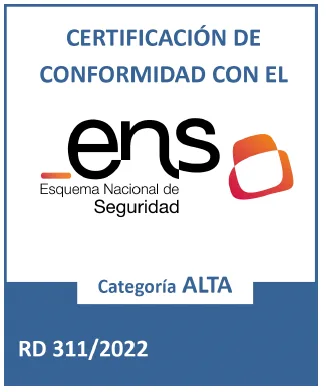
ENS HIGH category seal — RD 311/2022 Useful for public universities and suppliers ENS HIGH category + 5 in-house ISO certifications RD 311/2022 · cert. ENS_2.026.061
  • Real track record in university infrastructure
  • ENS for public universities
  • GDPR special research regime (Article 89)
  • DFIR retainer for enrolment peaks

Subsectors

9 covered · public + private + research

Operational focus

Infrastructure · M365 · IAM · exposure

Regulatory framework

ENS · NIS2 · GDPR Art. 89 · ISO 27001

Verifiable qualifications

ENS HIGH certification + five ISO certifications — operational credibility for the university sector

Hard2bit is certified to ENS HIGH category (RD 311/2022) and to ISO/IEC 27001:2022, with five in-house ISO certifications in total (27001, 22301, 20000-1, 9001, 14001). For public universities and IT suppliers with public university sector contracts, this combination simplifies onboarding as a critical supplier and streamlines regulatory due diligence by the rectorate and the IT services unit.

ENS HIGH category certification per RD 311/2022 — certificate no. ENS_2.026.061
ENS HIGH category
ISO/IEC 27001:2022 certification
ISO/IEC 27001:2022
ENS certificate no.
ENS_2.026.061
ENS certification body
ACCM · ENAC 48/C-PR503
In-house certifications
5 ISO + ENS HIGH + Innovative SME

Executive summary

What this page covers

For CISOs, IT vice-rectorates, IT services directors and academic leadership.

Sector context

Why university cybersecurity calls for an operational approach, not just documentary compliance

A university is one of the most technologically complex organisations in existence: a distributed campus with thousands of devices, tens of thousands of users with constant turnover (new students every year, faculty, administrative staff, alumni), a vast attack surface across massive BYOD, IoT in classrooms and laboratories, open Wi-Fi networks and student-facing public services (enrolment, grades, repository, learning platform).

On top of that operational reality sits a dense regulatory framework: ENS mandatory for public universities, NIS2 when applicable by scale, the GDPR public-sector regime for public universities and GDPR Article 89 for processing for scientific research purposes. Add European funding requirements (Horizon Europe data management plans), bioethics committee codes and, for private universities with international clients, frameworks such as ISO 27001.

Hard2bit approaches the university sector from a real track record focused on infrastructure security: redesign of campus network segmentation, hardening of Active Directory and Microsoft 365, faculty identity governance, cloud posture and reduction of external exposure. On top of that operational baseline we apply the rest of the catalogue (vulnerability management, SOC/MDR, DFIR retainer, ENS or ISO 27001 compliance) without claiming mass experience where we do not have it.

Audience

Subsectors covered within higher education

Spanish higher education combines the public sector (public universities and affiliated centres) with the private sector (private universities, business schools, EdTech). We adapt the service to the entity type and to its applicable regulatory framework.

Public universities

Universities within the Spanish public university system. ENS is mandatory (public sector), NIS2 applies above thresholds, GDPR public-sector regime governs personal data and Article 89 GDPR provides a specific regime for scientific research data.

Private universities

Private universities with physical campuses and on-site, blended or fully online delivery. GDPR applies, ISO 27001 when a certifiable ISMS is needed, ENS where there are agreements or contracts with public administrations, and contractual security requirements from European research funding.

Affiliated centres and university foundations

Centres affiliated to universities, university foundations and related entities. They typically inherit the regulatory framework of their parent institution and share technology platforms and IT services.

Business schools and postgraduate programmes

Business schools, MBA programmes, executive education and specialised postgraduate programmes. Focus on the learning platform (LMS), international student data, alumni privileged accesses and brand reputation.

University research centres

Affiliated research institutes, public research bodies (CSIC, IMDEA, ICREA, IRTA and equivalents), joint research units and centres of excellence. Research data, intellectual property and data management plan requirements under H2020 and Horizon Europe.

University clinical research

University hospitals, Health Research Institutes (IIS) and centres with clinical cohorts. Crosses with the healthcare sector: GDPR reinforced by special-category health data, plus traceability for regulatory and ethics-committee audits.

Learning platforms and EdTech

LMS, MOOCs, assessment platforms, online proctoring tools, EdTech B2B vendors selling to universities. ISO 27001 is common when public-sector clients are involved; ENS is required when selling to Spanish public universities.

Polytechnic centres of excellence and advanced VET

Specialised vocational training, polytechnic centres, technical schools. Frequent overlap with industry through internships and collaborative projects. Personal data of students and intellectual property of projects.

IT suppliers to the higher-education sector

Companies providing technology services to universities under contract (academic management, LMS, federated identity, hosting, support). ENS applies to the system or service contracted with a public university.

Regulatory framework

Regulation applicable to higher education

ENS (public universities), NIS2 if applicable by scale, GDPR public-sector regime and Article 89 for research, ISO 27001 when a certifiable ISMS is needed. On top of that, particularities of the Spanish university ecosystem (RedIRIS, SIR/eduGAIN federation) and requirements from European research projects.

ENS — RD 311/2022 (public universities and public agreements)

Spain's National Security Framework. Mandatory for public universities (part of the Spanish public sector) and for their IT suppliers with in-scope contracts. Also applies to private universities for the parts contractually linked to public administrations.

NIS2 — Directive (EU) 2022/2555

Applies to educational and research entities when they fall in scope by scale or by their role in the sector. National transposition specifies thresholds. NIS2 coexists with ENS — most evidence is reusable across both.

GDPR + Spanish LOPDGDD university regime

General Data Protection Regulation and Spanish data protection law applied to typical sector processing: academic records, grades, internships, alumni access. Public universities additionally fall under the public-sector regime.

GDPR Article 89 — scientific research

Specific regime for processing for scientific research purposes (and historical or statistical research). Pseudonymisation safeguards, data minimisation, frequent DPIAs and careful handling of special-category data when present (biomedical, social or gender research).

LOSU — Spanish University System Act (2023)

General framework for the Spanish university system. Not pure cybersecurity, but defines governance, transparency and obligations that translate into information requirements (active publication, transparency portals, open data).

Horizon Europe — data management plans

European research calls (Horizon Europe and previous H2020) require data management plans with information-security commitments, privacy-by-design and traceability. Without these, a competitive proposal is penalised in evaluation.

ISO/IEC 27001 + ISO 27018 (cloud/privacy)

ISO 27001 as the baseline ISMS, especially for private universities with international clients or EdTech vendors with a product. ISO 27018 adds a specific extension for personal data in the cloud, relevant to LMS and online platforms.

RedIRIS and SIR / eduGAIN federation

RedIRIS operates the Spanish academic network. The SIR identity federation (RedIRIS Identity Service) and eduGAIN at European level are core building blocks of the university ecosystem for federated identity (single sign-on across universities). Their security is part of the operational baseline.

Applicable Hard2bit services

Core services for university-sector entities

Ten services from Hard2bit's catalogue ordered with the right focus: infrastructure, M365 and IAM first (where we have track record with university clients), followed by the rest of the catalogue applicable to the context.

Infrastructure and network audit — the core of university work

Technical review of the campus network, segmentation between networks (corporate, academic, eduroam, BYOD, IoT), Active Directory, Microsoft 365 / Entra ID, infrastructure hardening and hybrid environments. This is the front line where Hard2bit has worked with real university clients and where operational differentiation is clearest.

Infrastructure & network audit →

Microsoft 365 Security and identity hardening

Tenant hardening across M365, Entra ID, Defender, identity governance for faculty, administrative staff and students, access control to institutional SharePoint and OneDrive. A critical point in universities given the combination of many users, massive BYOD and sensitive research data.

Microsoft 365 Security →

IAM and cloud posture

Identity and access: SIR/eduGAIN federation, governance of privileged accounts, account lifecycle (student onboarding, end of enrolment, faculty offboarding), periodic reviews and posture across Azure, AWS or GCP where research or teaching infrastructure runs in cloud.

IAM & cloud posture →

Vulnerability management

Operational vulnerability lifecycle adapted to the academic calendar: change windows coordinated with non-teaching periods, prioritisation focused on student-critical assets (enrolment, grades, repository) and traceability for university governance.

Vulnerability management →

Penetration testing and offensive validation

Web, infrastructure, identity and cloud penetration testing on university assets. Special care with the academic e-administration portal, student portals and learning platforms. Under protocol, with agreed windows and, where applicable, on a mirror environment.

Penetration testing →

ENS adequacy for public universities

Adequacy to RD 311/2022 for public universities and affiliated centres, as well as for IT suppliers to the public university sector. DICAT categorisation, gap analysis, plan, evidence and accompaniment during the audit performed by the ENAC-accredited certification body.

ENS service →

ISO 27001 implementation and certification

ISO 27001 as a certifiable ISMS, especially for private universities with international clients or for B2B EdTech vendors that need to demonstrate maturity to university customers.

ISO 27001 →

24/7 SOC/MDR

Detection, investigation and response 24/7. Focus on university scenarios: ransomware precursors, abuse of faculty credentials, anomalous behaviour on eduroam and BYOD, exfiltration attempts from research repositories.

Managed SOC/MDR →

24/7 incident-response retainer

24/7 contract with activation in minutes and prior readiness onboarding. Designed for universities without sufficient in-house DFIR capability and with critical peaks (enrolment, end of term, thesis defence) where an incident cannot wait.

24/7 IR retainer →

Continuity and academic operational resilience

BIA focused on student-critical services (enrolment, grades, repository, learning platform), realistic RTO/RPO for non-teaching versus teaching periods, continuity plans for incidents and tabletop exercises against degraded scenarios.

Business continuity →

Hard2bit methodology

How we work with university entities

Six phases adapted to the academic rhythm: distributed campus, critical peaks (enrolment, end of term, thesis defence) and change windows constrained to non-teaching periods.

  1. 01

    University diagnosis and scope

    We understand the type of institution (public, private, affiliated centre, business school, research centre), the weight of the physical campus, the teaching modality (on-site, blended, online) and the academic calendar that drives intervention windows.

  2. 02

    Focus on infrastructure and network

    We start where the difference is greatest: review of the campus network, segmentation between networks, Active Directory, M365, eduroam, BYOD, IoT in classrooms and laboratories. This is Hard2bit's real track record with university clients.

  3. 03

    Applicable regulatory map

    ENS if it is a public university or there is a public agreement; NIS2 when applicable by scale; GDPR university regime and the specific regime for research (Article 89); ISO 27001 when a certifiable ISMS is needed; data management plans when European research calls apply.

  4. 04

    Implementation aligned to the academic calendar

    Technical landing of measures respecting the university calendar: changes coordinated with non-teaching periods (Christmas, Easter, summer), validation on a mirror environment when possible, coordination with the IT services unit and the IT director.

  5. 05

    Audit accompaniment and reporting

    Accompaniment during ENS, ISO 27001 or other audits requested by the rectorate. Periodic reporting to the CISO, the IT vice-rectorate, the IT security committee and, where applicable, to the public regional authority on universities.

  6. 06

    Ongoing operation and incident response

    Ongoing operation matched to the academic cadence, change management, DFIR retainer for critical peak scenarios (enrolment, online exams) and continuous improvement after incidents with lessons learned and tabletop exercises.

Why Hard2bit in universities

Honest differentiation — starting where we have track record

Real track record in university infrastructure security

Hard2bit has worked with specific university clients, primarily on infrastructure-security projects: review and redesign of network segmentation, hardening of Active Directory and Microsoft 365, faculty identity governance, cloud posture and reduction of external exposure. This is where we bring demonstrable operational judgement — not consultancy boilerplate.

ENS Alta certification — relevant for public universities

Hard2bit holds ENS HIGH category certification (cert. ENS_2.026.061, ACCM under ENAC 48/C-PR503). For public universities, university foundations and IT suppliers with public university sector contracts, this certification streamlines regulatory due diligence by the rectorate and the IT services unit.

Compliance + technical + DFIR combined for the university sector

The university sector combines a regulatory framework (ENS for public universities, special GDPR regime for research, NIS2 where applicable), the operational reality of a distributed campus and critical academic peaks. The combined capability of compliance, recurring technical work (SOC/MDR, vulnerability management, hardening) and incident response (24/7 retainer) covers the full lifecycle.

Strict confidentiality, no client names on public pages

Out of commitment to our university clients, we do not publish named references to educational institutions. Specific details on projects performed are shared in direct conversation with mutual confidentiality.

Representative scenario

Scenario · Spanish university group with three campuses consolidating infrastructure security ahead of the enrolment peak

A Spanish private university group with three campuses across different cities was facing the start of the academic year with a heterogeneous network infrastructure (the result of mergers and organic growth): incomplete segmentation between corporate, academic, eduroam and BYOD networks; Active Directory with privileged accounts scattered and without periodic review; an inherited Microsoft 365 tenant configuration and external exposure of student portals with legacy assets. The project ran on four parallel fronts during summer (the only change window without classes): redesigned segmentation with clearly differentiated zones and auditable ACLs, hardening of Active Directory and M365 / Entra ID with privileged account governance and broad MFA coverage, reduction of external exposure with controlled decommissioning of obsolete services and consolidation behind Cloudflare, and onboarding of a 24/7 DFIR retainer with readiness over the new architecture. The academic year started with the enrolment peak without incident and with a recurring operations programme on the cleaned baseline.

Frequently asked questions

FAQ — cybersecurity in higher education

Direct answers to the questions we receive most often from CISOs, IT vice-rectorates, IT services directors and academic leadership in the university sector.

Does ENS apply to my university?

Yes for public universities, which are part of the Spanish public sector. It also applies to private universities for the parts contractually linked to public administrations (scholarship programmes, public projects, institutional chairs) and to their in-scope IT suppliers. The applicable category depends on the system's impact across the DICAT dimensions and is validated in the initial diagnosis.

Does Hard2bit perform the official ENS audit of a university?

No. The official ENS audit is performed by an ENAC-accredited certification body. Hard2bit acts as consultant: we implement, adapt, prepare evidence and accompany during the audit performed by the certification body. That separation between certifier and consultant is the correct one and is what serious university institutions expect.

What specific experience do you have with universities?

We have worked with specific university clients primarily on infrastructure-security projects: review and redesign of campus network segmentation, hardening of Active Directory and Microsoft 365, faculty identity governance, cloud posture and reduction of external exposure. The remaining services in the catalogue are offered as applicable capability; in infrastructure is where we bring the most demonstrable operational judgement.

How is the academic calendar handled during a security project?

The academic calendar comes first. Technical projects coordinate change windows with non-teaching periods (Christmas, Easter, summer), validate on a mirror environment when possible and avoid interventions during critical peaks (enrolment, final exams, master's and bachelor's thesis defence). Summer remains the large window for infrastructure overhauls.

How do eduroam and the SIR/eduGAIN federation fit in?

eduroam is the federated wireless Wi-Fi network for the academic community, and SIR/eduGAIN are the identity federations that enable single sign-on across universities. They are part of the operational ecosystem and the surfaces we review in audits: RADIUS configuration, eduroam segmentation versus other networks, federated credential control and governance of privileged accounts at the identity provider.

What is the relationship between ENS and NIS2 in universities?

Public universities are public sector and therefore fall under ENS. NIS2 may apply additionally when the entity exceeds the thresholds of the national transposition or by its role in the sector. When both coexist, a well-designed implementation reuses most evidence across ENS, NIS2 and ISO 27001. We explain it in the framework comparison.

Do you cover university clinical research with special-category data?

Yes. Clinical research at university hospitals and Health Research Institutes combines a GDPR framework reinforced by special-category health data, GDPR Article 89 for scientific research, ethics-committee requirements and, in European projects, data management plans. When the entity is both academic and clinical, the healthcare sector angle also applies.

How are intellectual property and research data handled?

As critical assets. The strategy combines information classification, access control to research repositories, segregation between development and production environments for academic software, governance of privileged accounts, SOC monitoring of exfiltration attempts and documentary traceability for regulatory and ethics-committee audits.

Do you offer a 24/7 retainer for incidents during the enrolment peak?

Yes. The 24/7 retainer includes activation in minutes, a preventive hour bank and prior onboarding over the university architecture. Designed especially for peak scenarios (enrolment, end of term, online exams) where an incident paralyses a public service with thousands of stakeholders and the response window does not allow business hours.

Do you work with EdTech or IT suppliers to the university sector?

Yes. EdTech with a software product lives under GDPR, ISO 27001 when a certifiable ISMS is needed and ENS when selling to Spanish public universities. For these cases we design a multi-framework package with reusable evidence. If your end client is a Spanish public university, ENS is usually the unblocker.

How do you address massive BYOD on campus?

Through segmentation: isolate personal networks (BYOD, visitor eduroam) from corporate networks and critical services, restrict lateral movement, monitor anomalous behaviour from the SOC and apply Conditional Access policies in M365 / Entra ID. A university cannot individually manage tens of thousands of personal devices, but it can control the network and access to services.

What confidentiality do you offer with university clients?

We operate under strict confidentiality as a standard practice. We do not publish named references to universities or educational institutions on landing pages or public materials, except with express authorisation for a specific purpose. Specific project details are shared in direct conversation.

Related

Complementary sectors and services

Let's talk

Does your university want to strengthen infrastructure ahead of the next academic year?

A short session to diagnose the current state of the system, which frameworks apply (ENS, NIS2, research GDPR), how robust campus segmentation and M365 are and where to start before the next enrolment peak. Confidential conversation, no commitment.

Page reviewed: 2026-04-28. Hard2bit · Cybersecurity company in Spain since 2013 · ENS HIGH category · ISO 27001 · ISO 22301 · ISO 20000-1 · ISO 9001 · ISO 14001